
How Dental Bridges Prevent Shifting Teeth and Bite Problems
Losing a tooth can feel like a big deal at first, and then a few weeks go by. Once the area heals, especially if the gap is toward the back of your mouth, it’s easy to start chewing on the other side and stop thinking about the space altogether. But your teeth around that gap can still start moving, even while it’s out of sight and out of mind. Below, we’ll cover what an open space does to the teeth around it and how dental bridges hold those teeth in place.
What Happens When a Missing Tooth Is Left Untreated?
Each of your teeth rests against the teeth beside it and meets a tooth in the opposite jaw when you bite down. When a tooth is lost, the teeth on either side lose the contact that kept them upright, so they’ll gradually tilt into the open space.
The tooth directly above or below the gap has nothing to bite against anymore, so it can slowly push farther out of its socket. Dentists call this supraeruption. These changes usually happen gradually and without pain, and the teeth won’t move back on their own.
How Dental Bridges Work to Replace Missing Teeth
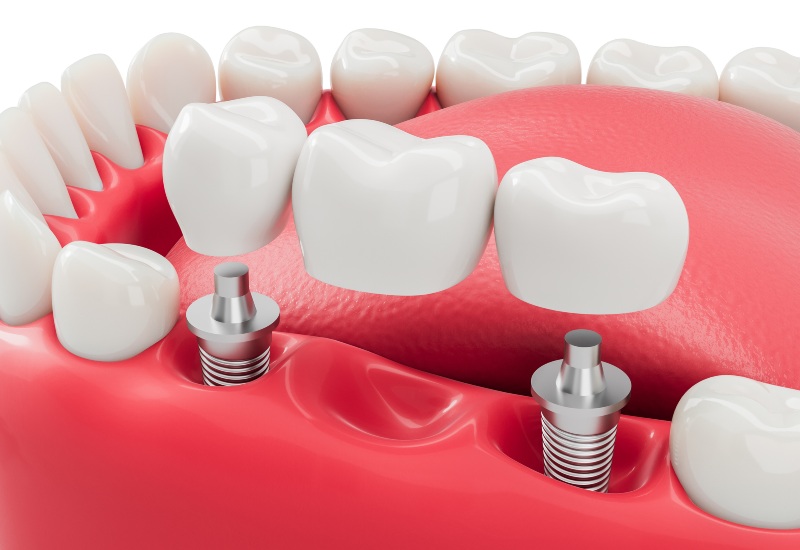
A traditional bridge is made of three connected pieces: a crown for each tooth on either side of the gap and a false tooth, called a pontic, in between. During your first appointment, your dentist will reshape those two anchor teeth so the crowns can fit over them. Then they’ll take impressions and place a temporary bridge to protect the teeth while you wait.
Once the lab finishes producing your permanent bridge, usually a couple of weeks later, your dentist will check how it fits against your bite and cement it in place.
How Dental Bridges Prevent Shifting Teeth
Once your dental bridge is in place, the false tooth fills the space your missing tooth left behind. The anchor teeth on either side are held firmly by their crowns, so they have no room to tilt into the gap. And the tooth across from the gap has a surface to meet again every time you bite down, which keeps it from pushing farther out of its socket.
Getting a bridge placed soon after losing a tooth will help stop your other teeth from moving before they’ve had much time to shift. If yours have already moved, your dentist may need to plan some additional treatment before placing the bridge.
The Role of Dental Bridges in Preventing Bite Problems
When all your teeth are in position, your upper and lower teeth meet evenly and share the pressure of every bite. Once teeth begin tilting around a gap, some of them start meeting before the others, and those teeth are going to take on more of the force when you chew. Over time, that can wear away your enamel unevenly and put extra strain on your jaw joint.
By keeping each tooth in its position, a bridge helps your teeth meet the way they did before you lost one. Upright teeth are also much easier to clean, since tilted teeth tend to trap food and plaque.
The Benefits of Dental Bridges Beyond Tooth Replacement
Once your bridge is in, you’ll likely notice a few changes in your everyday routine, such as:
- Chewing Comfortably on Both Sides – You won’t need to steer food away from the gap anymore, so you can chew evenly on both sides of your mouth again.
- A Complete Smile – Your dentist will match the false tooth to the shade and shape of your natural teeth, so the gap won’t show when you smile or laugh.
- A Tooth You Never Take Out – Your bridge is cemented in place, so there’s nothing to remove at night or soak in a cleaning solution.
Dental Bridges vs. Other Tooth Replacement Options
A bridge is often a great fit when the teeth beside your gap are healthy enough to anchor it, and especially when they already need crowns. Depending on your teeth and your goals, your dentist may also recommend one of these alternatives:
Dental Implants
Your dentist will surgically place an implant in your jawbone to take the place of the tooth’s root, so your neighboring teeth won’t need crowns. You’ll need a few months of healing first.
Implant-Supported Bridges
When several teeth in a row are missing, implants can anchor a bridge in place of your natural teeth.
Partial Dentures
A partial fills one or more gaps with false teeth on a removable base. It usually costs the least up front, but you’ll take it out each day to clean it.
Caring for Your Dental Bridge for Long-Term Success
Your false tooth rests right on your gums, so regular floss can’t slide underneath it the way it does between natural teeth. Once a day, you’ll want to clean under the false tooth with a floss threader, Superfloss, or a water flosser. Then give the gumline around both anchor crowns some extra care, since decay along those crown edges is the biggest threat to your bridge.
Plus, your dentist will examine those edges at each checkup, so they can treat any decay before it reaches the tooth underneath.
Restore Your Bite With Library Park Dental
Every month a gap stays open gives your teeth around it more time to move, so it’s worth planning your replacement while the fix is still simple. Here at Library Park Dental, we place dental bridges, implants, and partial dentures for patients throughout Kenosha. Our team includes Dr. Paul Sung, a prosthodontist whose specialty training centers on replacing missing teeth and rebuilding how they meet when you bite. We’ll examine your gap and your bite, then explain the timeline and cost of each option before you decide.
Schedule a visit with us online today, and we’ll help you choose the replacement that keeps your smile complete.
Dental Bridges – Frequently Asked Questions
What Types of Dental Bridges Are Available?
There are four main types you’ll hear about. A traditional bridge uses crowns on the teeth on both sides of the gap, and it’s the most common design. A cantilever bridge is anchored on just one side, so dentists usually save it for areas that take lighter bite pressure. A Maryland bridge bonds small wings to the backs of the neighboring teeth instead of crowning them. And an implant-supported bridge is anchored to dental implants rather than your natural teeth.
Can a Dental Bridge Help Improve Your Speech?
It often can. Missing teeth, especially near the front of your mouth, can make certain words harder to pronounce clearly. Once your bridge fills that space, your speech should sound the way it did before you lost the tooth. If anything still feels off after the first few days, let your dentist know so they can check the fit.
How Long Can a Dental Bridge Last?
With good at-home care, you can usually expect a bridge to last 10 to 15 years. Since your bridge relies completely on its anchor teeth, keeping those teeth free of decay will do more for its lifespan than anything else. If a bridge does wear out, your dentist can replace it with a new one.
Can Missing Teeth Lead to Bone Loss in the Jaw?
Yes, they can. Your jawbone stays strong partly because your tooth roots press on it every time you chew. Once a tooth and its root are gone, the bone in that spot gradually shrinks. A traditional bridge replaces the part of the tooth you see, but not the root. So if preserving bone is a priority for you, ask your dentist whether an implant or implant-supported bridge would suit your case.