
Choosing the Right Dental Crown: A Breakdown of Materials That Fit Your Smile
When your dentist lets you know a tooth needs a crown, it’s natural to focus on getting that tooth fixed and feeling normal again. But somewhere in that conversation, you’ll likely hear that crowns can be made from a few different materials, and that some will suit your tooth better than others.
Each of those materials looks, wears, and holds up a little differently in your mouth, so it’s worth knowing what you’re choosing between. Let’s take an in-depth look at the most common types of dental crowns and how you and your dentist can pick the one that bolsters your smile.
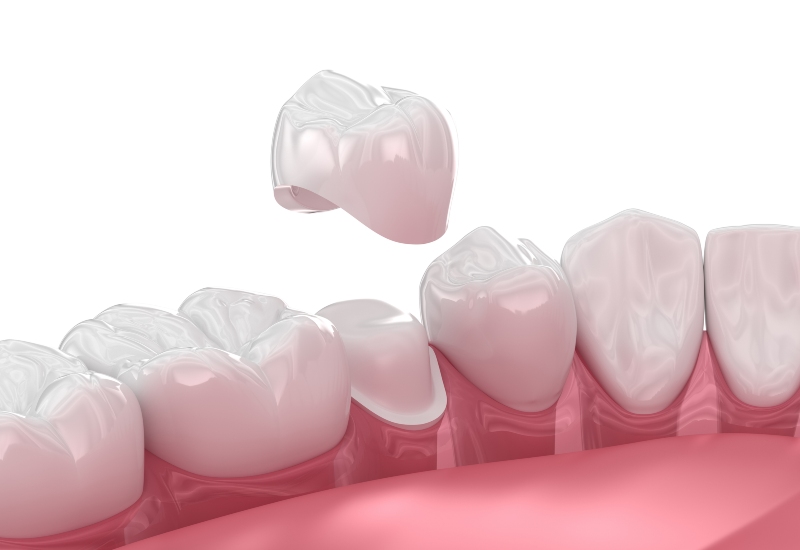
Understanding Dental Crowns and Their Purpose
A dental crown is a custom-made cap that covers the entire visible part of a tooth, from the chewing surface down to the gumline. Dentists place crowns to strengthen a tooth that doesn’t have enough natural structure left to hold a filling, or to keep a cracked tooth from breaking further. A crown can also anchor a dental bridge, top off a dental implant, or cover a tooth that’s badly discolored or misshapen. That’s why the dental crown material your dentist recommends will depend on why your tooth needs a crown in the first place.
Comparing Different Types of Dental Crown Materials
Most crowns are made from ceramic, metal, or a combination of the two, and your dentist will likely talk with you about a few different types of dental crowns, such as:
- All-Ceramic Porcelain – Porcelain crowns look the most like natural enamel, which makes them a popular choice for front teeth. They’re more prone to chipping under heavy pressure, though.
- Zirconia – Zirconia is the strongest tooth-colored crown material, and it resists chipping better than other ceramics. Dentists use it on both front and back teeth.
- Porcelain-Fused-to-Metal – These crowns have a metal base with porcelain layered over it. They were the standard for decades, but all-ceramic options have replaced them in many cases.
- Gold and Metal Alloys – Gold alloy crowns are extremely durable and gentle on the teeth they bite against. Their metallic color usually limits them to molars toward the back of the mouth.
Dental Crown Material Comparison: Key Factors to Consider
Your dentist will usually narrow down your options based on where the tooth sits in your mouth. Your back molars take on most of the pressure when you chew, so a crown on one of those teeth will need to stand up to that force. A front tooth shows every time you smile, so a natural look will be the bigger priority there.
Your dentist will also look at how much of your natural tooth each option would require them to remove. Some crown dental materials hold their strength even when they’re made thin. Gold, for instance, requires less tooth removal than porcelain, which has to be thicker to resist chipping.
How to Choose the Best Crown Material for Your Smile
Before your dentist recommends a material, let them know about anything that could impact how your crown will hold up. If you clench or grind your teeth, especially at night, your dentist will want a material that can endure that extra pressure.
With that information, your dentist will examine the tooth and your bite, then walk you through the options that suit both. That’ll give you a chance to compare how each crown will look, how long it’s likely to last, and what it’ll cost. Just be sure to ask what your dental plan covers so you’ll know your out-of-pocket cost before you decide.
How to Choose Dental Crown Color for Natural-Looking Results
If you’ve been thinking about getting your teeth whitened, you’ll want to have that done before your crown is made. Crown materials won’t lighten with whitening treatments, so your dentist will match the crown to your newly brightened shade.
At the appointment, your dentist will hold a shade guide of tooth-colored samples next to your tooth and compare how light or dark it is, along with its natural tint. Your choice of material will also affect the match, since porcelain lets light pass through more like natural enamel than zirconia does.
Choosing the Right Crown With Library Park Dental
A crown will protect your tooth for many years, so it’s worth choosing a material you’ll be happy with long after the appointment. Our team here at Library Park Dental custom-makes every crown we place for patients across Kenosha, so it’ll fit your bite and blend in with the teeth around it. Before your treatment, we’ll show you why we’re recommending a crown and walk you through the materials that suit that tooth. For many teeth, we can even mill a porcelain crown right here in our office with CEREC technology, a process Dr. Chiappetta has taught to dentists across the country.
If you’ve been told you need a crown, let’s take a closer look at that tooth together. Contact us or schedule your appointment with our team online today.
Dental Crowns – Frequently Asked Questions
How Long Does a Dental Crown Typically Last?
Most crowns last around 10 to 15 years, and many last a lot longer with good at-home care. The material and where the crown sits in your mouth will both affect its lifespan, and so will habits like grinding your teeth. Brushing, flossing around the gumline, and keeping up with your checkups will help yours last as long as possible. If a crown does wear out or get damaged, your dentist can replace it.
Does Placing a Crown Take Multiple Appointments?
Not always. With CEREC technology, we can design, mill, and place a porcelain crown in a single visit, so there’s no temporary crown to wear in between. A traditional lab-made crown takes two appointments: one to prepare the tooth and take impressions, and another to place the finished crown once the lab returns it. Some teeth, especially rear molars, still need a lab crown, and we’ll let you know ahead of time if yours does.
Can You Have an Allergic Reaction to a Dental Crown?
It’s uncommon, but it can happen. Most reactions occur from base-metal alloys containing nickel, which are sometimes used under the porcelain in porcelain-fused-to-metal crowns. Redness or irritation in the gums around the crown can be a sign. If you know you’re sensitive to certain metals, tell your dentist before treatment so they can recommend a metal-free option like zirconia or all-ceramic porcelain.
Can Dental Crowns Stain Over Time?
Porcelain and zirconia crowns resist staining much better than natural enamel, so they’ll usually keep their color for years. The natural teeth around them can still darken from everyday foods and drinks, though, which can make a crown look brighter than the teeth next to it over time. With porcelain-fused-to-metal crowns, a dark line can also appear at the gumline if your gums recede and expose the metal edge.