
When to Choose a Dental Crown Over a Filling
You’re sitting in the dentist’s chair, waiting for the results of your routine X-rays, when the dentist delivers the news that you have a compromised tooth. When it comes to restoring your smile, you are often faced with a choice between a dental filling and a dental crown.
While both treatments are designed to repair damaged teeth, they serve very different purposes depending on the extent of the damage. Making the right decision is crucial for your oral health, your comfort, and your wallet. This comprehensive guide will help you understand when to choose a dental crown over a filling.
What Is a Dental Filling?
A dental filling is a dental restoration used to treat minor tooth decay or small fractures. During this quick procedure, the dentist removes the decayed portion of the tooth, cleans the area, and fills the empty space with a specialized material. Today, most dentists use composite resin, which bonds directly to the enamel, though silver amalgam, gold, or porcelain can also be used.
What Is a Dental Crown?
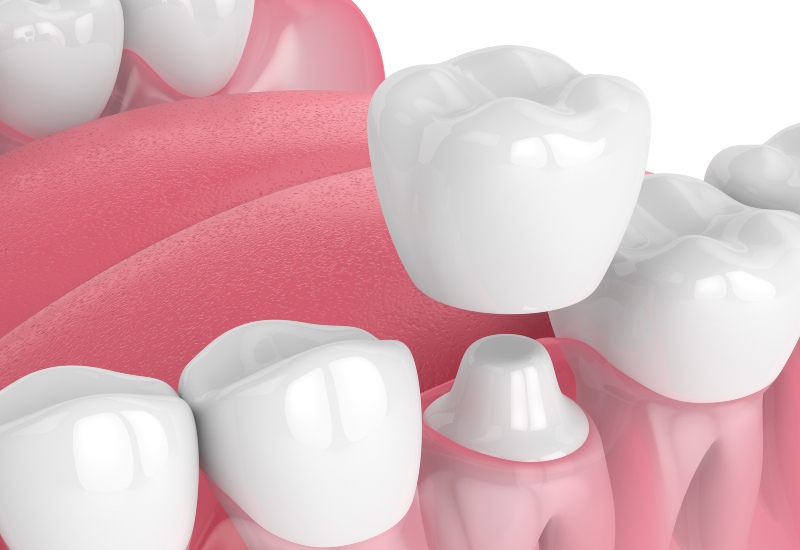
A dental crown (often called a “cap”) is an indirect restoration used to restore a tooth with more severe damage. Instead of filling a small hole, a crown completely covers the visible portion of the tooth above the gumline. Crowns are custom-made to match the exact shape, size, and color of your natural teeth. Common materials include porcelain-fused-to-metal (PFM), all-porcelain, zirconia, or gold alloys.
Dental Crown vs. Dental Filling: Side-by-Side Comparison
Primary Purpose
- Dental Filling: Treats minor decay; fills small cavities.
- Dental Crown: Strengthens, protects, and restores heavily damaged or weak teeth.
Coverage
- Dental Filling: Fills a localized hole within the tooth.
- Dental Crown: Caps the entire visible tooth structure.
Structural Support
- Dental Filling: Relies on the remaining healthy tooth structure.
- Dental Crown: Protects and reinforces a weakened tooth from breaking.
Durability
- Dental Filling: Typically lasts 5 to 12 years.
- Dental Crown: Can last 10 to 15+ years with proper care.
Number of Visits
- Dental Filling: Completed in a single appointment (usually 30–60 minutes).
- Dental Crown: Typically requires 2 visits (preparation/temp crown, then final placement).
Average Cost
- Dental Filling: Lower upfront cost.
- Dental Crown: Higher upfront cost (but offers greater long-term durability).
When a Filling Is Enough
For minor dental issues, a simple dental filling is almost always the preferred first line of defense. Fillings are highly conservative, meaning they preserve as much of your natural, healthy tooth structure as possible. A filling is generally the ideal choice if you have:
- Small to Moderate Cavities: Decay that has only penetrated the outer enamel and a small portion of the underlying dentin.
- Minor Chipping: A tiny chip on a non-biting surface that does not threaten the structural integrity of the tooth.
- Healthy Surrounding Structure: If more than 50% of your natural tooth structure is completely healthy and intact, a filling can easily support the daily pressure of chewing.
When Is a Crown Better Than a Filling?
While fillings are excellent for minor damage, they have their limits. If you try to place a filling in a tooth that is severely compromised, the remaining tooth walls can easily fracture under chewing pressure. You should choose a dental crown over a filling in the following scenarios:
- Large Cavities: When decay has consumed more than half of the tooth’s natural structure, a filling won’t hold up.
- Cracked or Broken Teeth: If a tooth has a deep fracture line, a filling cannot hold the pieces together. A crown acts as a protective splint, bound tightly over the tooth to prevent the crack from spreading to the root.
- After a Root Canal: Root canal therapy removes the tooth’s blood supply, making it brittle and prone to fracture. Placing a crown after a root canal is standard practice to keep the tooth functional.
- Severe Wear and Tear: Teeth worn down by chronic grinding or acid reflux often require crowns to restore their original height, bite alignment, and strength.
Dental Crown Benefits for Long-Term Tooth Protection
It’s essential to look beyond the immediate cost and consider the long-term health of your mouth. Investing in a crown for a damaged tooth offers several key benefits:
- Restored Chewing Power: Unlike a massive filling that might feel sensitive or weak, a crown restores 100% of your normal biting force.
- Enhanced Aesthetics: Modern porcelain and zirconia crowns are indistinguishable from natural teeth, correcting discoloration and shape issues simultaneously.
- Protection Against Extraction: By encasing a heavily decayed or fractured tooth, a crown can save a tooth that would otherwise need to be pulled.
- Longevity: Because they’re engineered from incredibly durable materials, dental crowns withstand the wear and tear of daily use far better than composite fillings do over the long term.
Why Crowns Are Often Recommended for Large Cavities
When exploring large cavity treatment options, patients often ask why they can’t just get a massive filling. The answer lies in physics. Every time you chew, your teeth endure immense pressure. If a cavity is large, the remaining walls of the tooth are thin and weak. Placing a large filling inside a hollowed-out tooth acts like a wedge. When you bite down, the pressure pushes outward against those weak walls, which can cause the entire tooth to split down to the root.
If a tooth splits vertically, it cannot be saved and must be extracted. Choosing a crown prevents this failure by distributing biting forces evenly across the entire capped surface.
Factors Your Dentist Considers Before Recommending a Crown
When you visit us to discuss your options, we evaluate several clinical factors before making a recommendation. These include:
- Amount of Remaining Healthy Dentin and Enamel: If there isn’t enough healthy surface area to bond a filling securely, a crown is necessary.
- Location of the Tooth: Back molars endure the heaviest chewing forces and are more likely to require crowns than front teeth for similar levels of damage.
- Your Bite: If you clench or grind your teeth, or if your bite is misaligned, a filling in a high-pressure zone is highly likely to pop out or fail prematurely.
- Overall Oral Health: The condition of the surrounding gums and bone must be stable enough to support a crown.
How to Choose Between a Dental Crown and Filling
Ultimately, deciding whether to get a dental crown or a filling comes down to weighing immediate costs against long-term reliability. If your dentist gives you the option of either, ask yourself these questions:
- Do I want a quick, inexpensive fix, or am I looking for a long-term solution that won’t require replacement in a few years?
- Is this a tooth I chew on heavily?
- Am I concerned about the structural integrity of this tooth failing while I am eating?
Contact Library Park Dental
Library Park Dental provides complete dental care in Kenosha, WI. If you’re experiencing tooth pain, sensitivity, or have been told you need a tooth restoration, don’t wait for the damage to worsen. Schedule your comprehensive dental consultation today.
Frequently Asked Questions
How Long Does a Dental Crown Typically Last?
With excellent oral hygiene and regular dental checkups, a high-quality dental crown typically lasts between 10 and 15 years, and can even last a lifetime with proper care.
Can a Dental Filling Be Replaced With a Crown Later?
Yes. It is very common to replace old, worn-out, or failing fillings with a dental crown once the surrounding tooth structure becomes too weak to support a new filling.
Does Getting a Dental Crown Require Removing Some Natural Tooth Enamel?
Yes. To ensure the crown fits seamlessly in your bite and looks completely natural, your dentist must shave down a small amount of the tooth’s outer enamel.
Do Tooth-Colored Fillings Match the Appearance of Natural Teeth?
Yes, modern composite resin fillings are carefully color-matched to your natural teeth, making them virtually invisible when you smile or speak.
Is a Crown a Good Option for Teeth That Have Undergone Multiple Dental Treatments?
Absolutely. Teeth that have been filled multiple times over the years become structurally weak and brittle. A crown is the ideal way to encapsulate and reinforce a heavily treated tooth to prevent it from cracking.