
Understanding the Impact of Smoking and Vaping on Oral Health
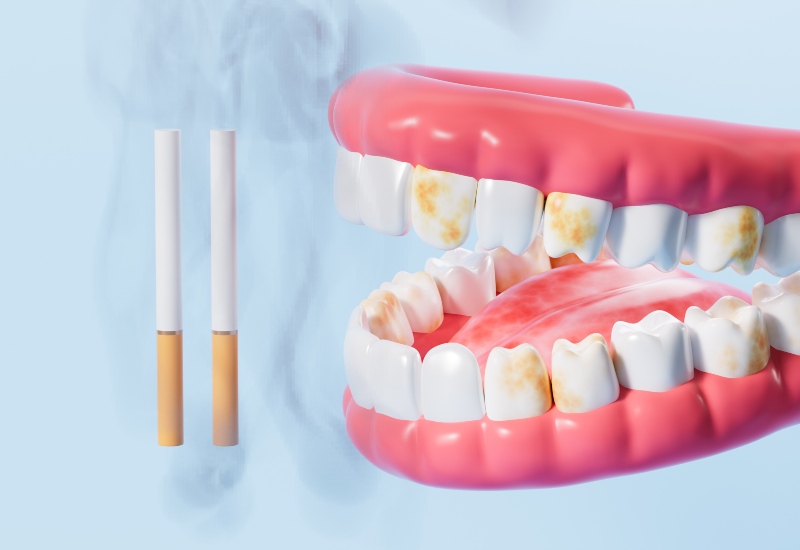
Most people know smoking harms the lungs and heart. Fewer think about the mouth, even though it’s the first part of the body to come into contact with tobacco smoke and vapor. Smoking and oral health are closely linked, and the same is true for vaping, which is often marketed as the safer choice.
Every puff exposes your teeth, gums, tongue, and soft tissues to chemicals that dry the mouth, restrict blood flow, and change the balance of bacteria. Over time, these effects can lead to stained teeth, gum disease, tooth loss, and serious conditions like oral cancer. Knowing these risks can help you protect your smile and make informed choices about your health.
Effects of Smoking on Teeth and Gums
The effects of smoking on teeth often show up first as cosmetic changes. Tar and nicotine soak into tooth enamel and leave yellow or brown stains that brushing alone can’t remove. Many smokers also notice persistent bad breath and a reduced sense of taste and smell.
The deeper damage happens below the surface:
- Reduced Blood Flow: Nicotine narrows blood vessels, so less oxygen and fewer nutrients reach the gums. This slows healing and can hide early signs of infection, such as bleeding.
- Weakened Immune Response: Smoking makes it harder for your body to fight the bacteria that cause gum infections.
- Tartar Buildup: Smokers tend to build up more plaque and hardened tartar along the gumline.
- Gum Recession: Over time, gums can pull away from the teeth and expose sensitive root surfaces.
How Vaping Affects Oral Health
Vaping doesn’t produce tar the way cigarettes do, but it isn’t harmless to your mouth. Most e-liquids contain nicotine, propylene glycol, vegetable glycerin, and flavoring chemicals, and each one affects your oral tissues differently. Other ways vaping affects oral health include:
- Nicotine restricts blood flow to the gums which raises the risk of gum inflammation and recession.
- Propylene glycol pulls moisture from the mouth and leads to chronic dry mouth.
- Vegetable glycerin and sweet flavorings can stick to teeth and feed cavity-causing bacteria.
- Heat and aerosols can irritate the soft tissues of the mouth and throat.
Long-Term Dental Problems Caused by Smoking and Vaping
Smoking and vaping can lead to lasting dental problems when left unchecked. Common long-term issues include:
- Tooth Decay: Dry mouth and bacterial buildup speed up enamel breakdown.
- Advanced Gum Disease: Ongoing inflammation can destroy gum tissue and bone.
- Tooth Loss: Smokers are more likely to lose teeth as supporting structures weaken.
- Bone Loss in Jaw: Bone loss can affect your facial structure and make tooth replacement harder.
- Implant Complications: Reduced blood flow raises the risk of # failure and slower healing.
- Chronic Bad Breath and Stains: These can persist even with good brushing habits.
The Increased Risk of Oral Cancer
Oral cancer is the most serious risk linked to tobacco use. Cigarettes, cigars, pipes, and smokeless tobacco contain known carcinogens that can damage cells in the lips, tongue, cheeks, gums, and throat. Combining tobacco with alcohol raises the risk even further.
The long-term cancer risk of vaping is still being studied, but e-cigarette aerosols have been found to contain potentially harmful chemicals and metals. Warning signs to watch for include:
- Sores that don’t heal within two weeks
- White or red patches in the mouth
- Lumps, thickening, or rough spots
- Persistent hoarseness or difficulty swallowing
- Unexplained numbness or bleeding
Smoking vs. Vaping: Comparing Their Effects on Oral Health
Vaping may expose users to fewer toxins than cigarettes, but both carry real oral health risks of smoking and vaping. Some of these oral health issues and differences include:
- Tooth Staining: Smoking causes heavy staining from tar and nicotine. Vaping causes mild to moderate staining from nicotine.
- Dry Mouth: Common with smoking and very common with vaping.
- Gum Disease Risk: Smoking raises it significantly. Vaping also raises it.
- Cavity Risk: Both raise it. With vaping, sweet flavorings and dry mouth add to the risk.
- Delayed Healing: Both slow healing. With vaping, this happens when the e-liquid has nicotine.
- Oral Cancer Risk: The link to smoking is well established. The risk from vaping is still being studied.
Protecting Your Oral Health if You Smoke or Vape
Quitting is the best way to protect your mouth. These oral hygiene tips for smokers and vapers can help reduce damage along the way:
- Brush twice a day with fluoride toothpaste and floss daily to remove plaque along the gumline.
- Stay hydrated and drink water throughout the day to fight dry mouth.
- Chew sugar-free gum with xylitol to stimulate saliva.
- Use an alcohol-free mouthwash that won’t dry out your mouth further.
- Limit sugary drinks and snacks, especially while vaping.
- Schedule regular cleanings to remove tartar and stains.
- Watch for changes such as bleeding gums, sores, or sensitivity, and report them promptly.
Take Control of Your Oral Health Today
Library Park Dental helps you take control of your oral health in Kenosha, WI. Smoking and vaping affect much more than your breath. They can stain your teeth, damage your gums, slow healing, and raise your risk of serious disease. The good news is that your mouth starts to recover once you quit, and with consistent care and regular checkups, you can protect your smile for years to come.
Whether you smoke, vape, or are working toward quitting, our team is here to help without judgment. Contact us to schedule a consultation.
Frequently Asked Questions
Can Smoking or Vaping Cause Bad Breath?
Yes. Both reduce saliva flow and leave chemical residue in the mouth, which lets odor-causing bacteria thrive. Smoking also leaves a lingering tobacco odor that’s hard to mask.
Does Vaping Affect Your Sense of Taste?
It can. Nicotine and chemical flavorings may dull taste buds over time, and chronic dry mouth can make foods taste flat. Many people notice their sense of taste improves after they quit.
Can Smoking Cause Darkening of the Gums?
Yes. Smoking can trigger a condition called smoker’s melanosis, in which gums develop brown or dark patches. It’s usually harmless, but any change in gum color should be checked by your dentist.
Why Does Vaping Increase Cavity Risk?
Vaping dries the mouth, which reduces saliva’s ability to neutralize acids. Sweet flavorings and sticky vegetable glycerin can also cling to teeth and feed cavity-causing bacteria.
How Often Should Smokers and Vapers Visit the Dentist?
Most smokers and vapers benefit from a checkup and cleaning every three to six months. Your dentist may recommend more frequent visits if you show signs of gum disease.