
How Sedation Dentistry Can Make Dental Procedures More Comfortable
For a lot of people, the hardest part of a dental appointment comes well before they ever sit down in the chair. You might start feeling nervous the moment you put the visit on your calendar, and that feeling can keep building right up until the day arrives. And parents often notice the same nerves in their kids as soon as they pull into the parking lot.
Dentists use sedation dentistry for kids and adults to ease exactly those kinds of nerves. Here’s a closer look at how sedation works and how it can make your next procedure a lot more comfortable.
What Is Sedation Dentistry?
With sedation dentistry, your dentist gives you medication that helps you relax during treatment. In most cases, you’ll stay awake and able to respond to questions the whole time, which is one of the main ways sedation differs from general anesthesia. But before recommending it, your dentist will review your health history and the procedure you need, then choose a type and level of sedation that’s appropriate for you. That way, you’ll get the potential benefits of sedation dentistry without feeling any more sedated than your treatment requires.
Who Can Benefit From Sedation Dentistry?
Dental anxiety is one of the most common reasons patients ask about sedation. Your dentist may also recommend it when you’re dealing with something such as:
- A Fear of Needles – If the thought of an injection makes you tense up, sedation can help you relax before your dentist numbs the area.
- Teeth That Are Sensitive to Touch – Cleanings and procedures are easier to sit through with sedation when even light pressure on your teeth feels uncomfortable.
- Feeling Confined in the Dental Chair – Some patients feel uneasy lying back with hands and instruments near their face, and sedation helps them settle in.
- Trouble Staying Still – Patients who have difficulty controlling their movements can stay calmer and more comfortable while the dentist works.
The Benefits of Sedation Dentistry
When you’re relaxed in the chair, your muscles aren’t tensed up, and your jaw is easier to keep open, so the whole appointment is going to feel a whole lot more comfortable. Many patients also find that time seems to pass a lot more quickly under sedation, making a longer visit feel like it’s over before they know it.
Some of the benefits of sedation in dentistry last long after you leave. A calmer appointment can make it a lot easier to book the next one, so you can keep up with the cleanings and checkups that keep your teeth healthy.
Types of Sedation Used in Dentistry
Your dentist can choose from a few types of sedation, depending on how relaxed you need to be and how long your procedure will take:
Nitrous Oxide
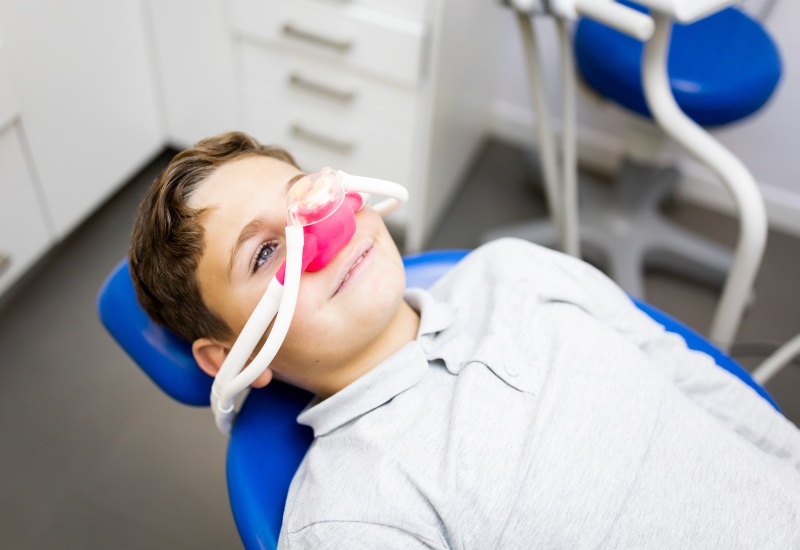
You’ll breathe nitrous oxide, often called laughing gas, through a small mask that rests over your nose. It takes effect within a few minutes, and your dentist can adjust how much you receive throughout the appointment. Because it’s mild and easy to adjust, dentists often use it for routine treatment like fillings and for anxious kids.
Oral Sedation
With oral sedation, you’ll take a prescribed pill about an hour before your appointment. By the time you sit down in the chair, you’ll feel drowsy and relaxed, though you’ll still be able to respond when your dentist talks to you. One of the oral sedation dentistry benefits many patients appreciate is that there’s no needle or mask involved.
IV Sedation
IV sedation delivers medication directly into your bloodstream through a small line, usually placed in your arm or hand. Since the medication takes effect quickly, your dentist can raise or lower the level as your procedure goes on. That level of control is one of the main benefits of IV sedation dentistry, especially during longer or more involved treatment.
How Sedation Dentistry Improves Long or Complex Procedures
Some treatments keep you in the chair for quite a while, like getting a dental implant or having several fillings replaced. Holding your mouth open that long can tire your jaw, and staying still can become uncomfortable well before the work is done. When you’re sedated, you can rest more easily, and your dentist can keep working without stopping as often for breaks. That’s one of the most practical sedation dentistry benefits for extensive care, since your dentist may be able to complete more of your treatment in one visit. That can mean fewer appointments and less time away from work or school.
Sedation Dentistry for Kids: Positive Dental Experiences
Most kids do just fine at the dentist once they know what to expect, so dentists usually help a nervous child by explaining each step and showing them the tools first. When a child is still too anxious to sit through their treatment, nitrous oxide is a common next step. The American Academy of Pediatric Dentistry recognizes it as a safe, effective way to ease anxiety in children.
One of the most meaningful pediatric sedation dentistry benefits is that your child can finish the care they need comfortably, which can make their next visit feel a lot less intimidating.
What to Expect Before, During, and After Sedation Dentistry
Before your appointment, your dentist will go over your health history and any medications you take, then give you instructions for eating and drinking ahead of time. If you’re having oral or IV sedation, you’ll also want to arrange for a responsible adult to drive you home.
During the procedure, your care team will monitor your breathing and vital signs while you rest. Once you’re finished, nitrous oxide wears off within minutes, and you can usually drive yourself home. Oral and IV sedation can leave you drowsy for a while longer, so plan to take it easy for the rest of the day.
Make Your Next Dental Visit Calmer With Library Park Dental
Feeling nervous about dental work is something a lot of patients share, and knowing your options can make the next appointment easier to face. Here at Library Park Dental, we proudly provide family dental care to patients of all ages here in Kenosha. Before treatment, we’ll talk through whatever makes appointments hard for you and go over the sedation options that fit your health history and procedure. And if your child is the nervous one, we’ll take the time to help them get comfortable with the chair and our tools first.
Book your visit online today, and let us know you’d like to talk about sedation so we can plan a calmer appointment together.
Sedation Dentistry – Frequently Asked Questions
Can Sedation Help If I’ve Avoided the Dentist for Years?
Yes, it can. Sedation can help you relax through the exam and cleaning that get you back on track, along with any treatment that’s been waiting. There’s no need to feel embarrassed about the time away, either. Just let us know how long it’s been, and we’ll plan your care at a pace you’re comfortable with.
Will I Remember My Dental Procedure After Sedation?
That’ll depend on the type of sedation you receive. With nitrous oxide, you’ll usually remember most of the appointment, just with a much calmer feeling throughout it. Oral and IV sedation can leave you with only hazy memories, and some patients remember very little of the procedure at all. Your dentist will tell you what to expect from the sedation they recommend.
Can Sedation Dentistry Reduce a Strong Gag Reflex?
It often can. When you’re relaxed, the muscles in your throat and jaw tense up less, so your gag reflex is less likely to kick in while your dentist works. That can make X-rays, impressions, and cleanings near the back of your mouth a lot easier to get through. Just mention your gag reflex before the appointment so your dentist can plan for it.
Does Sedation Help With Sensitivity to Dental Sounds?
For many patients, it does. Sedation helps you stay relaxed while you hear the drill and feel the water and suction, so those sounds and sensations are a lot less bothersome. Some patients also like to listen to music through headphones during treatment, so feel free to ask your dentist whether that’s an option at your visit.